

- Published on 28 July 2026
Cairo Rent Price Index – 2026 Q2 (April to June)
In the first edition of the Cairo Rent Price Index, we track unfurnished residential apartments across the city of Cairo. Rent indices are a key tool for bringing transparency to the market, identifying areas facing affordability pressures, and measuring the impact of housing policies. The Cairo Rent Price Index provides an analysis of median prices across the city, their year-on-year developments, median prices by neighbourhood, and rent prices per square meter. For more details on the calculation method, see the methodology.
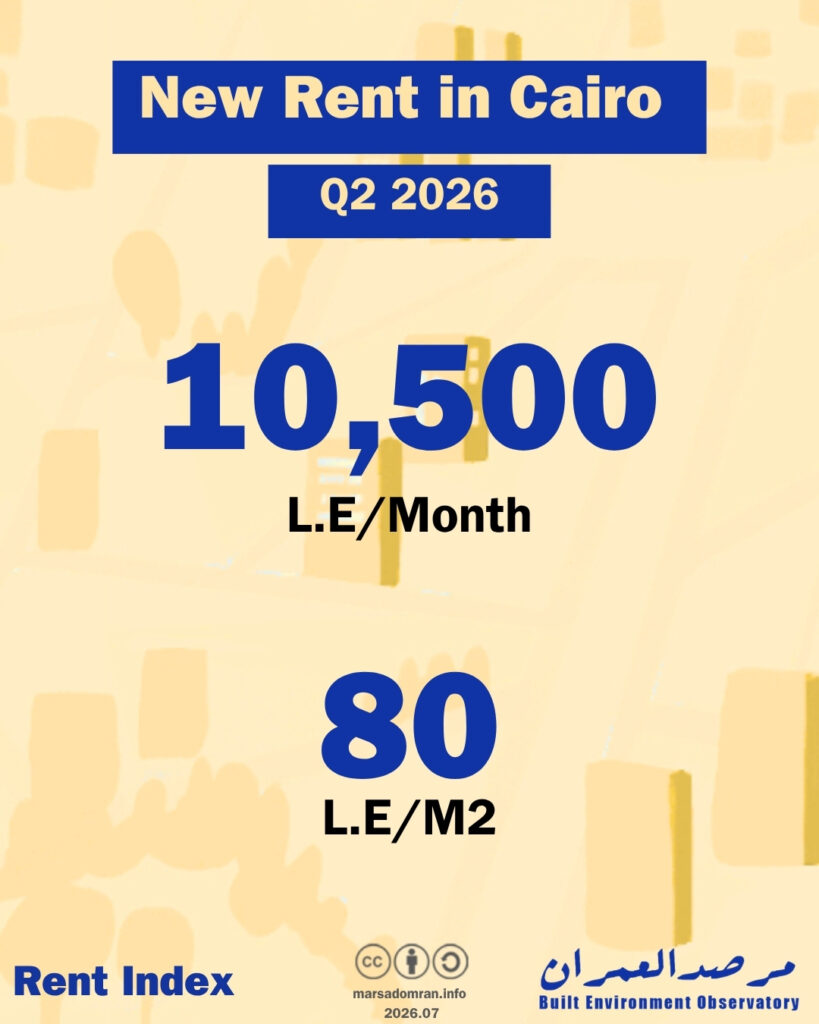
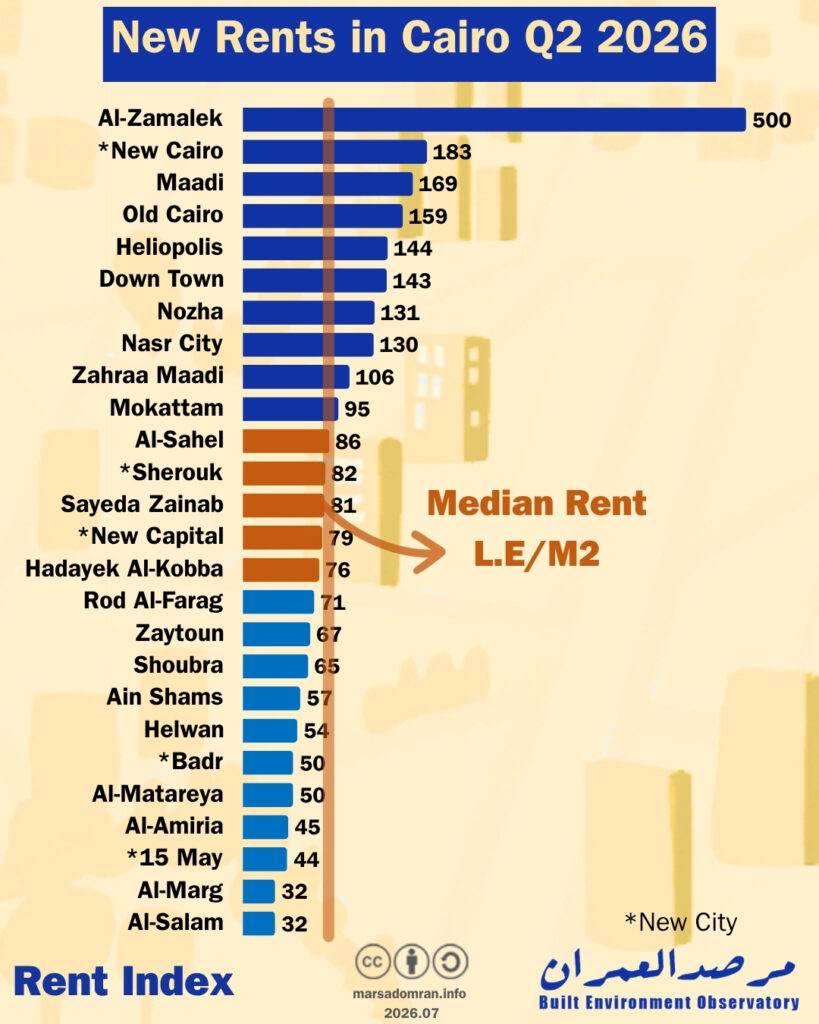
The median rent in Cairo was LE 10,000 per month during the second quarter (April to June) of 2026, while on the basis of property area, the monthly rent was LE 80 LE/Sq M.
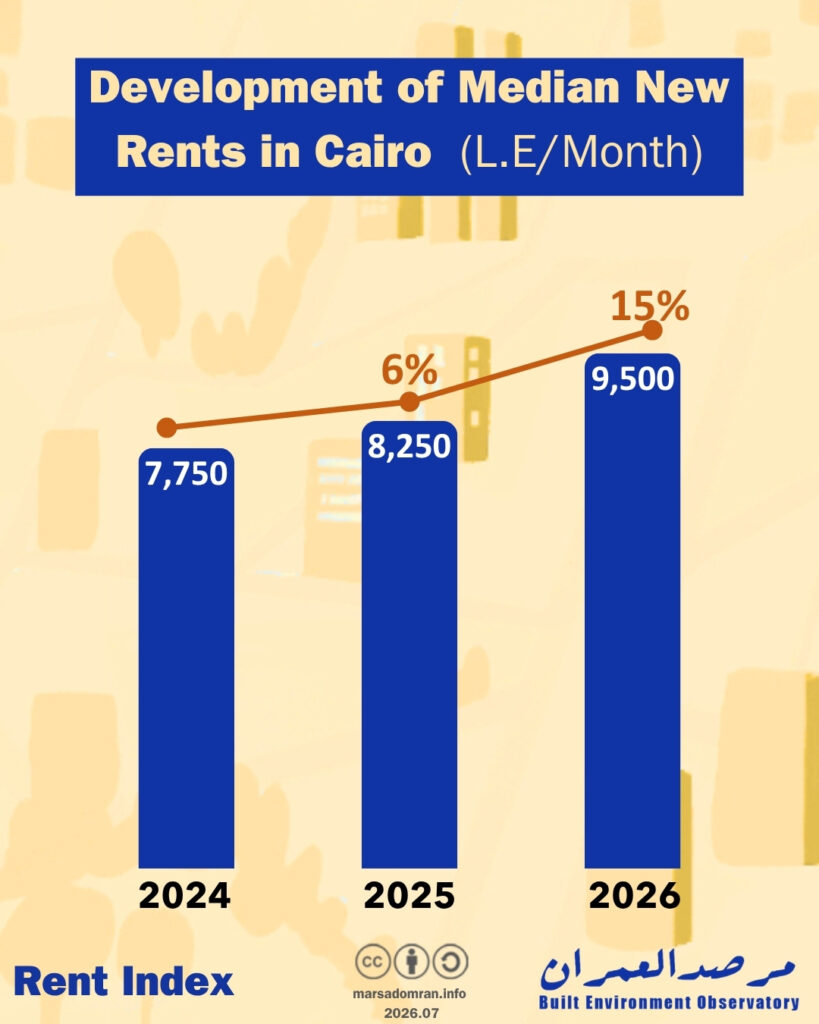
Rents rose by 15% year-on-year during the first six months of 2026, representing a significant jump compared to the 6% increase recorded between 2024 and 2025.
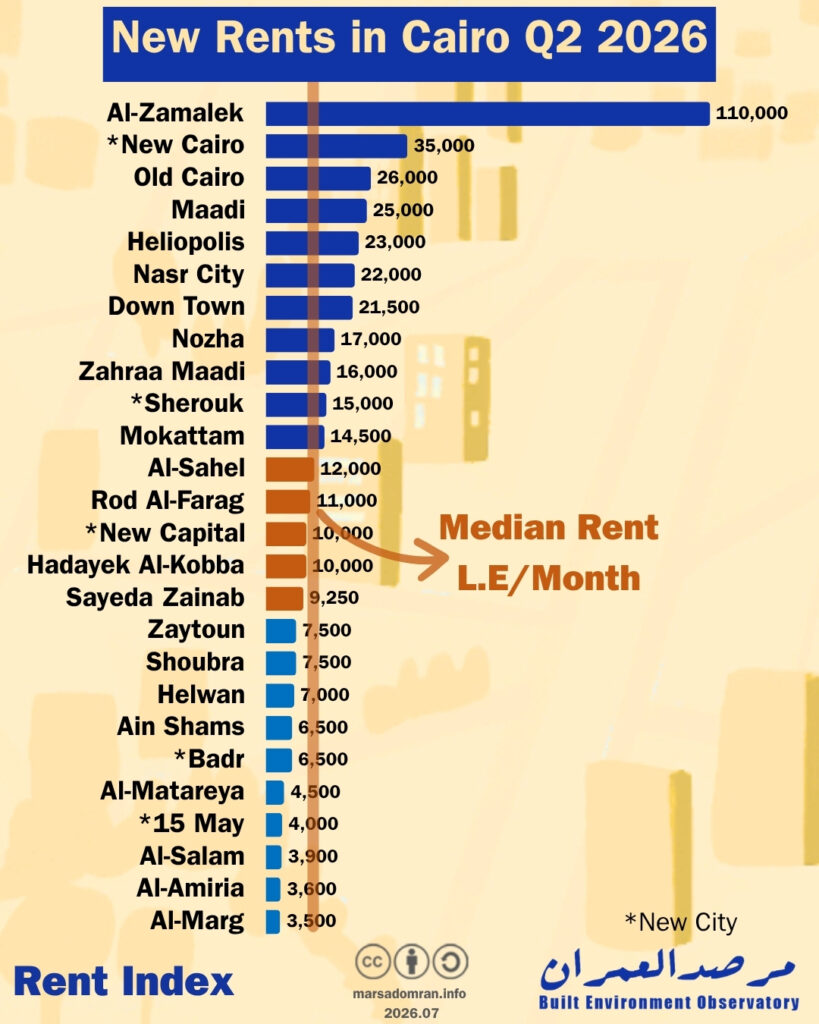
At the neighbourhood level, rental prices varied widely, ranging from LE 3,500 per month in Al-Marg neighbourhood to 31 times that amount in the Zamalek neighbourhood. Five of the 26 neighbourhoods for which rental price data was available fell within the range of median rents: Al-Sahel, Rod Al-Farag, the New Capital, Hadaeq Al-Quba, and Sayyida Zeinab.
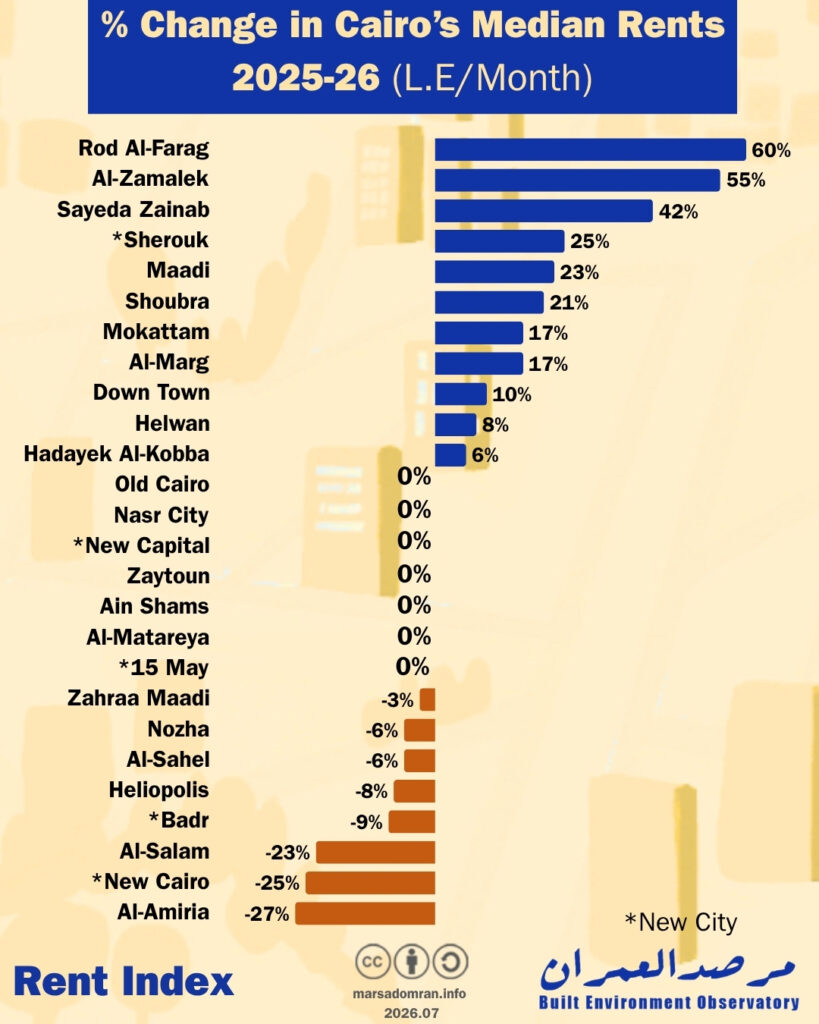
Compared to the previous year, rent price developments for 2026 fluctuated significantly across Cairo, rising in 11 neighbourhoods, with increases peaking at 55% and 60% in the Zamalek and Rod al-Farag neighbourhoods, respectively. Meanwhile, prices remained stable in seven neighbourhoods, including Matariya, Al-Zaytoun, and Ain Shams, while they fell in eight neighbourhoods, led by Al-Salam, New Cairo, and Al-Amiriya, by 23%, 25%, and 27%, respectively.
Looking at rental prices from another perspective—by calculating the rent per square meter— monthly rents ranged from 32 LE/Sq M. in Al-Salam neighbourhood to 500 LE/Sq M. in the Zamalek neighbourhood, a difference of 16-fold. Five neighbourhoods fell within the median of 80 LE/Sq M.: Al-Sahel, Al-Shorouk, Sayyida Zeinab, the New Capital, and Hadaeq Al-Quba.
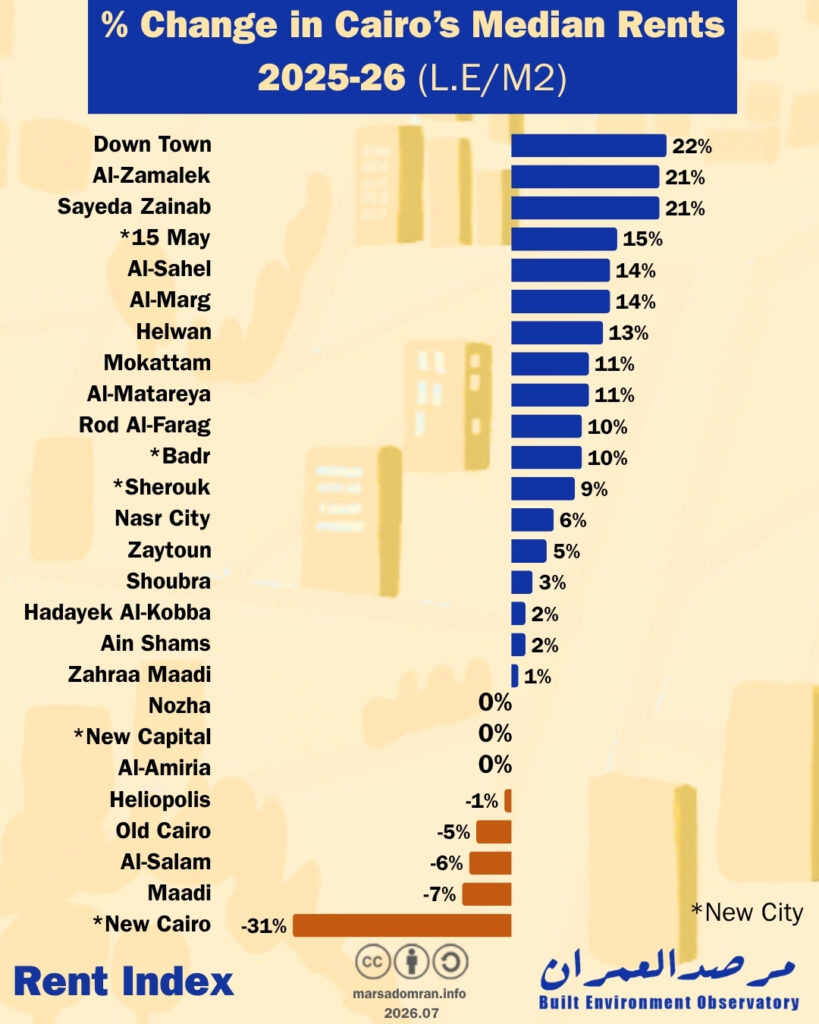
Monthly rents per square meter saw a less pronounced annual increase compared to overall rent increases, reaching a still high 21% in Sayeda Zeinab, and 22% in Zamalek, and Downtown, respectively. This suggests that the introduction of larger residential units influenced the price changes rather than merely an increase in their value. In contrast, seven neighbourhoods saw stable or nearly stable rents between 2025 and 2026, including Al-Nozha, the New Capital, and Al-Amiriya. Rents declined in four neighbourhoods, led by New Cairo, with 31%.
Methodology
The index is based on an analysis of more than 18,000 listings for rental properties on online real estate marketing platforms from January through June 2026, as well as data from 2024 and 2025, covering 26 residential neighbourhoods in Cairo Governorate.
The analysis focuses on residential units with New Rent (market rent) leases; all listings for non-residential units (commercial, administrative, or land) were excluded, as were furnished residential units.
The index measures the median price for each neighbourhood, which indicates that half of the apartments listed for rent in each neighbourhood are more expensive than the median, while the other half are lower than the median.
We attempted to ensure that all neighbourhoods were covered, however, some had no data reflecting the nature of users of real estate marketing websites, which affects the number and locations of available residential units.
Another exception was intentional on our part where we excluded a residential area within a neighbourhood that, while unique in character, had a large number of listings disproportionate to its relative size within the area, thereby providing a misleading picture of the final median value for the entire neighbourhood—as in the case of the “Uptown Cairo” project in the Mokattam neighbourhood.
It is also worth noting that the prices listed here do not necessarily reflect the rents paid by current tenants; rather, they indicate the rents requested by landlords wishing to rent out their units for today.
Team
Data Analysis and Visualisation: Sahar Nasser